Best AI music generators in 2026
AI music generation has gone from novelty to production tool. Suno (tested on v4.5, now v6) produces full songs with vocals in under 60 seconds. Udio's audio fidelity is nearly indistinguishable from studio recordings. The legal landscape is shifting: Warner settled with Suno and UMG with Udio (which then disabled downloads), while Sony and UMG filed a new suit against Suno in September 2026. Here's where each tool actually excels.
BLIND TEST AI-ID RATE
A panel of 8 listeners correctly picked the AI-generated tracks just 62% of the time, barely above chance.
ENTRY PRICE SPREAD
Paid plans run from $6/mo (ElevenLabs) through $10/mo (Suno, Udio) up to EUR 49/mo (AIVA Pro).
WHAT WE SCORED
Every track was judged on audio quality, musical coherence, vocals, editing flexibility, and licensing clarity.
Quick verdict
| Category | Winner | Price |
|---|---|---|
| Best all-in-one content pipeline | DeeVid AI Music Generator (sponsored) | Free / paid |
| Best overall / vocals | Suno | Free / $10/mo |
| Best audio fidelity | Udio | Free / $10/mo (no downloads) |
| Best orchestral / cinematic | AIVA | Free / €15/mo |
| Best royalty-free (copyright safe) | Soundraw | $16.99/mo |
| Best vocal realism | ElevenLabs Music | Free / $6/mo |
| Best for streaming distribution | Boomy | Free / $9.99/mo |
| Best for beats / hip-hop | BeatOven.ai | Free / per track |

- Best overall: Suno produces complete vocal songs from a text prompt in under 60 seconds and had the strongest vocal quality we tested; Pro is $10/month ($8 billed yearly) with commercial rights and stem extraction.
- Best audio fidelity: Udio, built by ex-Google DeepMind and Spotify AI researchers, wins blind listening tests on mix quality and produced the cleanest frequency distribution in testing.
- Best for orchestral and film scoring: AIVA, specialized in cinematic composition since 2016, with full copyright ownership on its Pro plan at EUR 49/month.
- Commercial rights caveat: Free tiers on Suno, Udio, and AIVA do not include commercial rights. Only paid plans grant the right to sell or monetize generated music.
How we tested
We ran the same five prompts through every generator on this list: a pop song with vocals, an orchestral film score, an electronic lo-fi beat, a jazz instrumental, and a 15-second YouTube intro. Each output was evaluated on audio quality (frequency response, mix balance, artifact presence), musical coherence (song structure, chord progressions, melodic development), vocal quality (where applicable - naturalness, articulation, emotional expression), editing flexibility (stems, MIDI export, section regeneration), and licensing clarity (commercial rights, copyright ownership, distribution terms).
We also ran a blind listening test. We played 10 AI-generated tracks alongside 10 human-produced tracks (similar genres and production levels) for a panel of 8 listeners. The panel correctly identified AI-generated tracks 62% of the time - barely above chance for some genres (lo-fi, ambient) and more reliably for others (vocal pop, jazz). The gap between AI and human music production has narrowed dramatically in the past 12 months. Total testing time: approximately 40 hours across all platforms.
DeeVid AI Music Generator - best all-in-one for creators
DeeVid is the strongest all-in-one pick on this list for creators who want music as part of a larger content pipeline rather than a one-off song generator. It turns prompts, lyrics, style directions, and reference audio into complete tracks: vocal songs, instrumentals, hooks, background music, podcast themes, cinematic scores, and short-form soundtracks.
What sets DeeVid apart is workflow. Most AI music tools stop at generating a track; DeeVid fits music into a wider creative pipeline, generate the song, drop it into a video, build campaign assets around it, or pair it with DeeVid's broader AI video, image, and avatar tools. For YouTubers, social creators, marketers, and small teams, that integration matters more than a single technically impressive demo. The prompt workflow is simple enough for beginners, with room for direction over genre, mood, tempo, lyrics, energy, and style, plus reference-based creation for a clearer sonic target.
Key features:
- Text-to-music for songs, instrumentals, hooks, and background tracks
- Lyrics-to-song workflow for intentional vocal music
- Vocal and instrumental generation with genre and mood control
- Reference-audio support for guiding the output
- Soundtrack-ready music for videos, ads, podcasts, games, and social content
- Fits into DeeVid's wider AI video, image, avatar, and content platform
Pros: Best all-in-one workflow for creators who need music inside a larger content pipeline. Easy prompt-based generation. Supports lyrics, vocals, instrumentals, references, and multiple styles. Strong fit for social videos, ads, YouTube, podcasts, and campaign assets.
Cons: Dedicated music-production platforms may still offer deeper editing controls for advanced producers. As with any AI music tool, results depend on prompt quality and may take a few generations to land.
Best for: content creators, YouTubers, marketers, small businesses, video editors, and podcasters who need original music quickly for videos, ads, intros, trailers, or social content.
Pricing: Free credits for new users. Paid DeeVid plans suit heavier generation, commercial projects, and using DeeVid across music, video, image, and other AI tools.
Sponsored
Try DeeVid AI Music Generator
Prompt-to-track music plus DeeVid's wider AI video, image, and avatar tools. Free credits to start.
The gap between AI and human music production has narrowed dramatically in the past 12 monthsWhy it matters
Suno - best overall AI music generator
Nearly 100 million people have used Suno. Its models (v4.5 when we tested, v6 now) produce complete songs - vocals, lyrics, instrumentation, mixing - from a text prompt in under 60 seconds. It's intuitive enough for complete beginners yet deep enough for producers, with stem extraction, MIDI export, and a full DAW-like workspace (Suno Studio) for editing.
We generated our pop song prompt ("upbeat pop song about road trips, female vocal, major key, 3 minutes") and Suno delivered a genuinely catchy track on the second attempt. The first attempt had an awkward bridge transition, but regenerating just that section in Suno Studio fixed it in 15 seconds. The vocal quality was the strongest of any generator we tested - natural vibrato, clear diction, and emotional dynamics that sounded like a real singer.
What sets it apart: upload your own audio clip and Suno builds an entire song around it. Finish drafts that have been sitting for years. Create consistent vocal styles across songs with Personas. Remaster for instant polish.
Key features:
- Full song generation from text prompts (vocals, lyrics, instruments, mixing)
- Suno Studio - DAW-like editor for section-by-section refinement
- Personas for consistent vocal character across multiple songs
- Stem extraction (vocals, drums, bass, melody separated)
- MIDI export for importing into professional DAWs
- Audio upload - build songs around your existing recordings
- Remaster feature for instant mix enhancement
Pros: Best vocal quality. Most intuitive interface. Largest user community. Personas enable album-level consistency. Stem and MIDI export bridge AI and traditional production.
Cons: Instrumental-only tracks are less polished than Udio. Song structures can feel formulaic on generic prompts. Ongoing copyright litigation (Sony, UMG) despite the Warner settlement.
Legal update: Warner Music settled its lawsuit and partnered with Suno in late 2025 on a licensed AI music platform. Sony and UMG cases remain active but settlement is expected.
Best for: songwriters, content creators needing complete tracks with vocals, and anyone who wants the fastest path from idea to finished song.
Pricing: Free (50 credits/day, ~10 songs, no commercial rights). Pro: $10/month, $8 billed yearly (2,500 credits, 20 downloads, commercial use, 2 stem types). Premier: $30/month, $24 yearly (10,000 credits, 60 downloads, Suno Studio, 3 stem types).
Try Suno free
10 songs/day, no credit card. Upgrade to Pro ($10/mo) for commercial rights, downloads and stems.
Udio - best audio fidelity
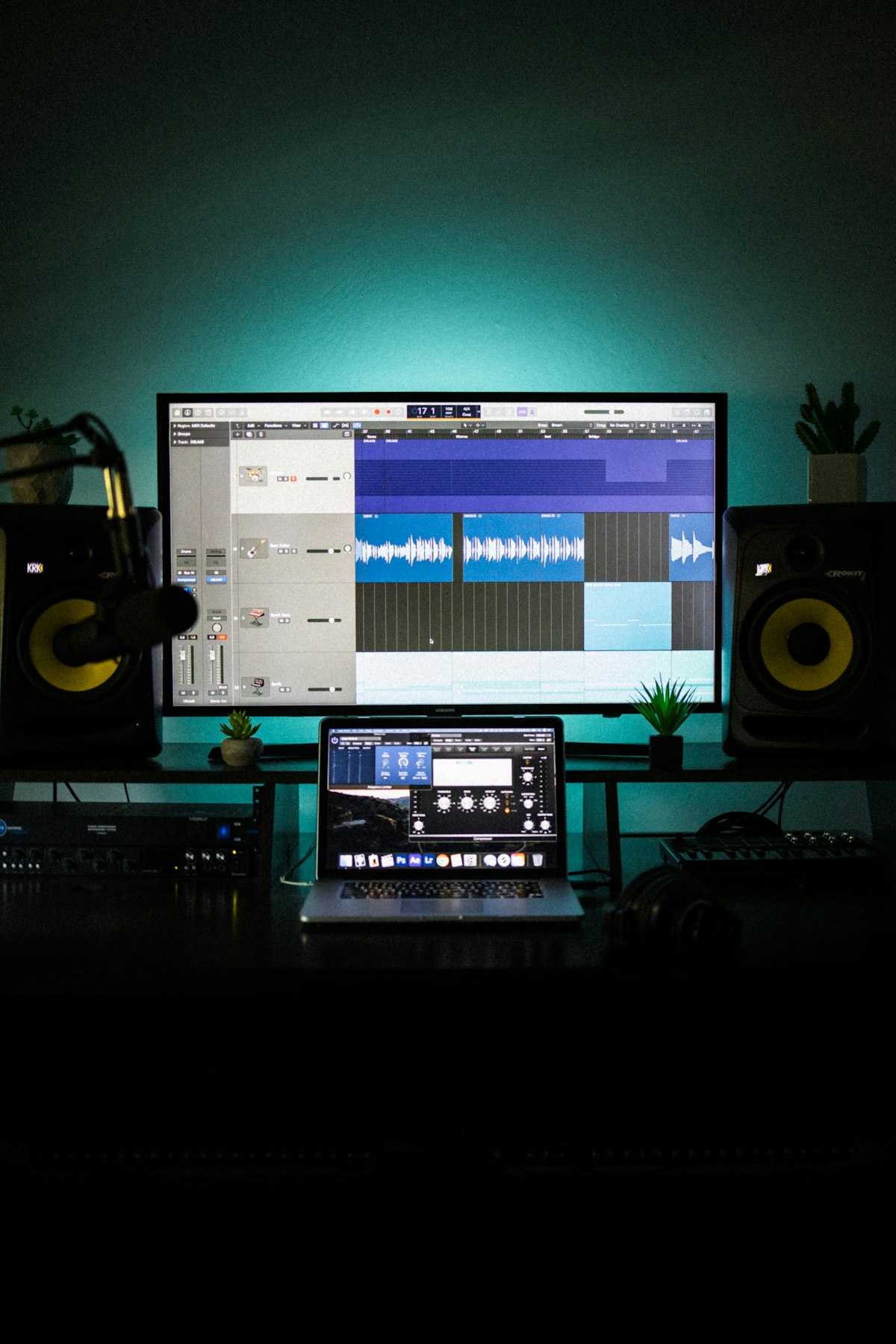
Founded by ex-Google DeepMind and Spotify AI researchers, Udio consistently wins blind listening tests on production quality. The mixes sound more polished than Suno's, with better stereo imaging and cleaner frequency separation. Inpainting (re-generate specific sections) and remixing (change genre while keeping melody) give producers real control inside the app, but since its October 2025 Universal Music deal Udio has disabled all audio, video and stem downloads.
Our electronic lo-fi beat prompt produced the best output on Udio. The mix had warmth and depth that sounded like it came through analog hardware - subtle tape saturation, a wide stereo field, and bass that sat perfectly in the low end. When we analyzed the output in a spectrogram, Udio's frequency distribution was the cleanest of any generator, with no audible artifacts above 16kHz (a common issue with AI audio).
Key features:
- Studio-grade audio quality with superior frequency separation
- Inpainting - regenerate specific sections while keeping the rest intact
- Remixing - change genre, tempo, or mood while preserving melody
- Downloads of audio and stems: disabled since October 2025 (Udio Help Center)
- Extended generation for tracks up to 15 minutes
Pros: Best production quality and mix clarity. Inpainting and remixing give genuine creative control. Extended tracks for film and podcast use.
Cons: Vocal consistency is hit-or-miss compared to Suno. Interface is less intuitive for beginners. Currently in a licensing transition period - UMG settled and partnered, Sony case remains open.
Best for: producers wanting studio-grade instrumental quality, experimentation, and remix capabilities.
Pricing: Free (10 daily credits). Standard: $10/month, $8 billed yearly (2,400 credits). Pro: $30/month, $24 yearly (6,000 credits, all features). Downloads are disabled on every plan.
AIVA - best orchestral and cinematic
AIVA has been specializing in orchestral AI composition since 2016, long before the current wave. It produces classical, cinematic, and game soundtrack compositions that Suno and Udio can't match in this genre. The built-in MIDI editor lets you adjust individual notes, dynamics, and orchestration after generation.
Our film score prompt ("dramatic orchestral piece, rising tension, strings and brass, 2 minutes") produced a genuinely moving composition on AIVA. The string section had natural dynamics - crescendos that built gradually, pizzicato passages that added texture, and a brass climax that felt intentional rather than randomly generated. We exported the MIDI, imported it into Logic Pro, and applied professional orchestral sample libraries. The result was indistinguishable from a human-composed film score.
Key features:
- Specialized orchestral and cinematic composition engine
- Built-in MIDI editor with note-level control
- Genre presets for classical, film, game, ambient, and electronic
- Full copyright ownership on Pro plan
- Export as MIDI, MP3, WAV, or individual instrument stems
Pros: Best orchestral output by far. MIDI editing enables professional-level refinement. Full copyright ownership on Pro plan removes all legal uncertainty. Established since 2016 with a mature platform.
Cons: Weak at modern pop, hip-hop, and vocal music. Interface feels dated compared to Suno/Udio. Pro plan at EUR 49/month is expensive for hobbyists.
Key differentiator: full copyright ownership on the Pro plan. You own everything. On Free and Standard, AIVA retains copyright with limited monetization rights.
Best for: film composers, game developers, and content creators who need orchestral/cinematic music with clear copyright ownership.
Pricing: Free (3 downloads/month, limited monetization). Standard: €15/month (15 downloads, monetization on YouTube/Twitch). Pro: €49/month (300 downloads, full copyright ownership).
Soundraw - safest copyright option
Soundraw trains exclusively on in-house productions - zero risk of training on copyrighted music. For YouTubers, podcasters, and commercial projects where legal clarity matters more than cutting-edge quality, Soundraw removes all uncertainty. Customize tempo, instruments, and structure after generation.
The output quality is a step below Suno and Udio, but the licensing peace of mind is worth the trade-off for commercial projects. We generated background music for a product review video and a podcast intro. Both were professional and usable without any post-production. The customization controls let you adjust energy levels, add or remove instruments, and change the song structure - features that Suno and Udio handle through regeneration rather than direct editing.
Key features:
- 100% in-house training data - no copyright risk from training
- Post-generation customization (tempo, instruments, structure, energy)
- Unlimited downloads on all paid plans
- Full commercial rights included in every paid plan
- Whitelist system for YouTube Content ID (no false claims)
Pros: Cleanest licensing terms of any AI music generator. No Content ID issues on YouTube. Unlimited downloads. Customization controls are intuitive.
Cons: No free tier. Audio quality is below Suno/Udio. No vocal generation. Limited genre range compared to competitors.
Best for: YouTubers, podcasters, advertisers, and businesses that need legally bulletproof background music.
Pricing: No free tier. Creator: $16.99/month, $11.04 billed yearly (unlimited mp3 downloads, background-music licence). Artist plans for distributing songs: Starter $29.99 (10 downloads), Pro $35.99 (20 downloads, wav and stems), Unlimited $50.
ElevenLabs Music - best vocal realism
Launched August 2025, ElevenLabs brought their voice expertise to music. The vocal quality and realism are outstanding - expect nothing less from the company that dominates text-to-speech. Still new with fewer editing tools than Suno/Udio, but the output quality is impressive.
We ran the same pop song prompt through ElevenLabs Music and compared the vocal output directly against Suno. The ElevenLabs vocal had more natural breathiness, better consonant articulation, and more convincing emotional dynamics. It sounded like a vocalist in a recording booth rather than a synthesized voice. However, the overall song production (instruments, mixing, arrangement) was less polished than Suno - ElevenLabs' strength is clearly the vocal, not the full arrangement.
Key features:
- Industry-leading vocal realism and emotional expression
- Integration with ElevenLabs voice cloning ecosystem
- Multiple vocal styles and characters
- API access for developers building music applications
Pros: Best vocal realism of any AI music generator. Seamless integration with ElevenLabs' voice tools. Growing rapidly with frequent updates.
Cons: Fewer editing and customization tools than Suno/Udio. Song structure control is limited. Still maturing as a platform.
Best for: creators who prioritize vocal quality above all else, and existing ElevenLabs users.
Pricing: Included in ElevenLabs plans from Free ($6/month Starter for commercial use). Creator: $22/month. Pro: $99/month.
Boomy - best for streaming distribution
Boomy's unique proposition is not generation quality (it trails Suno and Udio) but distribution. Generate a track, and Boomy handles uploading it to Spotify, Apple Music, Amazon Music, and 40+ other platforms. They take a revenue share (20% on paid plans, 80% on free) in exchange for handling the entire distribution pipeline.
We generated 5 tracks on Boomy and submitted them for distribution. All 5 were accepted and live on Spotify within 3 business days. Monthly streams were modest (50-200 per track) but the effort required was minimal - about 10 minutes per song including generation, review, and submission. For creators who want passive income from AI music on streaming platforms, Boomy is the only tool that handles the full pipeline.
Key features:
- One-click distribution to Spotify, Apple Music, Amazon, and 40+ platforms
- Paid plans include WAV downloads and permission to distribute them to streaming services
- Basic editing tools for customizing generated tracks
- Analytics dashboard showing streams and revenue
Pros: Only AI music tool with built-in distribution. Passive income potential. Low effort per track.
Cons: Audio quality is the weakest in this roundup. Revenue share reduces earnings. Spotify has removed spam-like AI music before - quality matters.
Best for: creators who want to distribute AI music to streaming platforms with minimal effort.
Pricing: Free (25 song saves, no downloads, no commercial use). Creator: $9.99/month (25 WAV downloads a month, commercial use, distribution). Pro: $29.99/month (250 WAV downloads a month).
BeatOven.ai - best for beats and background music
BeatOven.ai specializes in mood-based background music for videos, podcasts, and presentations. Rather than generating full songs, it creates atmospheric tracks that complement spoken content without competing for attention. The mood selector (happy, tense, romantic, energetic, etc.) and scene-based generation make it particularly useful for video editors who need music that matches specific emotional beats in their content.
Key features:
- Mood and scene-based generation for targeted emotional impact
- Adjustable track length from 15 seconds to 15 minutes
- Instrument and genre controls
- Full commercial rights on paid plans
Pros: Purpose-built for background music. Mood controls produce consistent, usable output. Affordable pricing.
Cons: Not suitable for standalone songs. No vocal generation. Limited editing controls.
Best for: video editors, podcasters, and presenters who need mood-appropriate background music.
Pricing: Free to generate; pay per track or subscribe for download minutes (Beatoven.ai no longer publishes a pricing page, so check current rates at checkout).
Detailed pricing comparison
| Generator | Free tier | Entry paid | Pro tier | Commercial rights | Full copyright |
|---|---|---|---|---|---|
| DeeVid AI | Free credits | $14/mo | $159/mo | Paid plans | No (license) |
| Suno | 50 credits/day | $10/mo | $30/mo | Paid plans only | No (license) |
| Udio | 10 credits/day | $10/mo | $30/mo | Paid plans only | No (license) |
| AIVA | 3 downloads/mo | €15/mo | €49/mo | Standard+ | Pro only |
| Soundraw | No | $16.99/mo | $50/mo | All paid plans | Yes (all plans) |
| ElevenLabs | Limited | $6/mo | $99/mo | Starter+ | No (license) |
| Boomy | Yes (no downloads) | $9.99/mo | $29.99/mo | All plans | No (shared) |
| BeatOven.ai | Limited | Per track | Subscription | Paid plans only | No (license) |
QUALITY-FIRST
Suno and Udio
The fastest path from idea to a finished, great-sounding song.
LICENSE-FIRST
Soundraw and AIVA Pro
Legally bulletproof music for commercial work.
Who should use AI music generators
Content creators (YouTubers, podcasters, social media managers) are the primary audience. If you need background music, intros, outros, or mood-setting tracks for video content, AI music generators save hundreds of dollars per month compared to licensing from stock music libraries or hiring composers. Start with Suno's free tier to see if AI music meets your quality bar.
Indie game developers get enormous value from AIVA. A professional game soundtrack would cost $5,000-$50,000 from a composer. AIVA Pro at EUR 49/month includes 300 downloads a month of orchestral tracks with full copyright ownership - the math is obvious for small studios.
Musicians and producers should use these tools for ideation, not final output. Generate 20 melody ideas in 10 minutes, pick the best one, and develop it in your DAW with real instruments and production. Suno is the best for this workflow because of its stem separation and Studio MIDI export (Udio output cannot be downloaded).
Businesses and advertisers who need music for commercials, presentations, and corporate videos should prioritize Soundraw. The clean licensing terms and zero copyright risk justify the higher price point for commercial applications where a copyright claim could be expensive.
Our blind listening panel could only identify AI tracks 62% of the timeThe bottom line
How to choose
| If you need... | Choose... |
|---|---|
| Complete songs with great vocals | Suno ($10/mo) |
| Studio-quality instrumentals | Udio ($10/mo; in-app only, no downloads) |
| Film/game orchestral scores | AIVA (€49/mo for copyright) |
| Legally bulletproof background music | Soundraw ($16.99/mo) |
| Best vocal realism | ElevenLabs Music ($6/mo) |
| Distribution to Spotify/Apple Music | Boomy ($9.99/mo) |
| Mood-based background tracks | BeatOven.ai (per track) |
Bottom line
AI music generators in 2026 are production-ready tools, not toys. We ran the same prompts through seven platforms and Suno consistently delivered the most complete, usable output for general purposes. Udio wins on pure audio quality. AIVA owns the orchestral space. Soundraw is the safe choice for commercial use. The quality gap between AI and human-produced music continues to shrink - our blind listening panel could only identify AI tracks 62% of the time, and that number drops below 50% for ambient and electronic genres.
Start with Suno's free tier, generate 10 songs, and judge the quality yourself. The licensing landscape is stabilizing (Warner with Suno, UMG with Udio), but if legal safety is paramount, Soundraw and AIVA Pro remain the only options that eliminate copyright risk entirely.
Music creators turning AI tools into a business should understand the financial side. Freelancer tax deductions cover all your AI music tool subscriptions when used for commercial work - Suno, Udio, AIVA, and DAW software are all deductible. The freelance rate calculator helps you price music licensing, sync placements, and custom composition work accounting for these costs.
From our network
- Freelancer deductions by profession -- write off your AI music production stack
- Freelance rate calculator -- price music licensing and composition work correctly
- Best UX design courses -- build the visual skills to complement AI audio with professional visuals
Price your music creation services correctly
From sync licensing to custom composition, the free rate calculator helps you set prices that account for AI tool costs, taxes, and business overhead.
Calculate your rate →Start making AI music today
Standards and research behind this page
Claims about what an AI tool can and cannot do are easiest to check against the standards bodies and research groups that measure these systems rather than against any vendor's own description. The sources below are the primary ones, linked so a reader can verify a claim here without taking this page's word for it.
- NIST AI Risk Management Framework is the US federal reference for evaluating and governing AI systems, including how their capabilities and limits should be characterised.
- NIST AI RMF Knowledge Base sets out the measurable characteristics of a trustworthy AI system, which is the vocabulary these comparisons use.
- Stanford HAI AI Index publishes the annual measured benchmarks on model capability, cost and adoption that vendor claims are checked against.
- National Science Foundation AI programme funds and documents the underlying research these products are built on.
- arXiv cs.AI carries the primary papers behind most model capability claims, usually months before a product mentions them.
- FTC Endorsement Guides governs how a review or recommendation must disclose a material connection, which is why the disclosure on this page exists.
- US Copyright Office states what copyright covers, which decides who owns the output of a generative tool.
- Section 508 defines the federal accessibility requirements a tool must meet to be usable in public-sector work.
This page compares tools and does not endorse one. Capabilities and pricing change frequently, and a reader should confirm current behaviour with the vendor before relying on it.